
Why only Italy
And how you prove it, instead of putting a sticker on it.
Photo by Tom Tvr on Unsplash
Two different things that always get confused
“Made in Italy” is about the processing: it says where the last significant step was done. An oil bottled in Verona with Spanish olives is made in Italy. A pasta extruded in Abruzzo with Canadian wheat is made in Italy.
“Italian raw material” is about what is inside: the olives, the wheat, the milk, the meat. It is the other half of the sentence, and it is the half that usually goes unwritten.
On Orterra both are required, and the second is always written down, product by product.
Who can join
A farming or artisan business based in Italy and producing in Italy, registered with the companies register. No resellers, no importers, no middlemen: whoever sells here is whoever grew, raised or made it.
The check is done by the buying office before opening the business, with the company record and the activity code, and it blocks entry: it is not a check that can be put off.
What we write on every lot
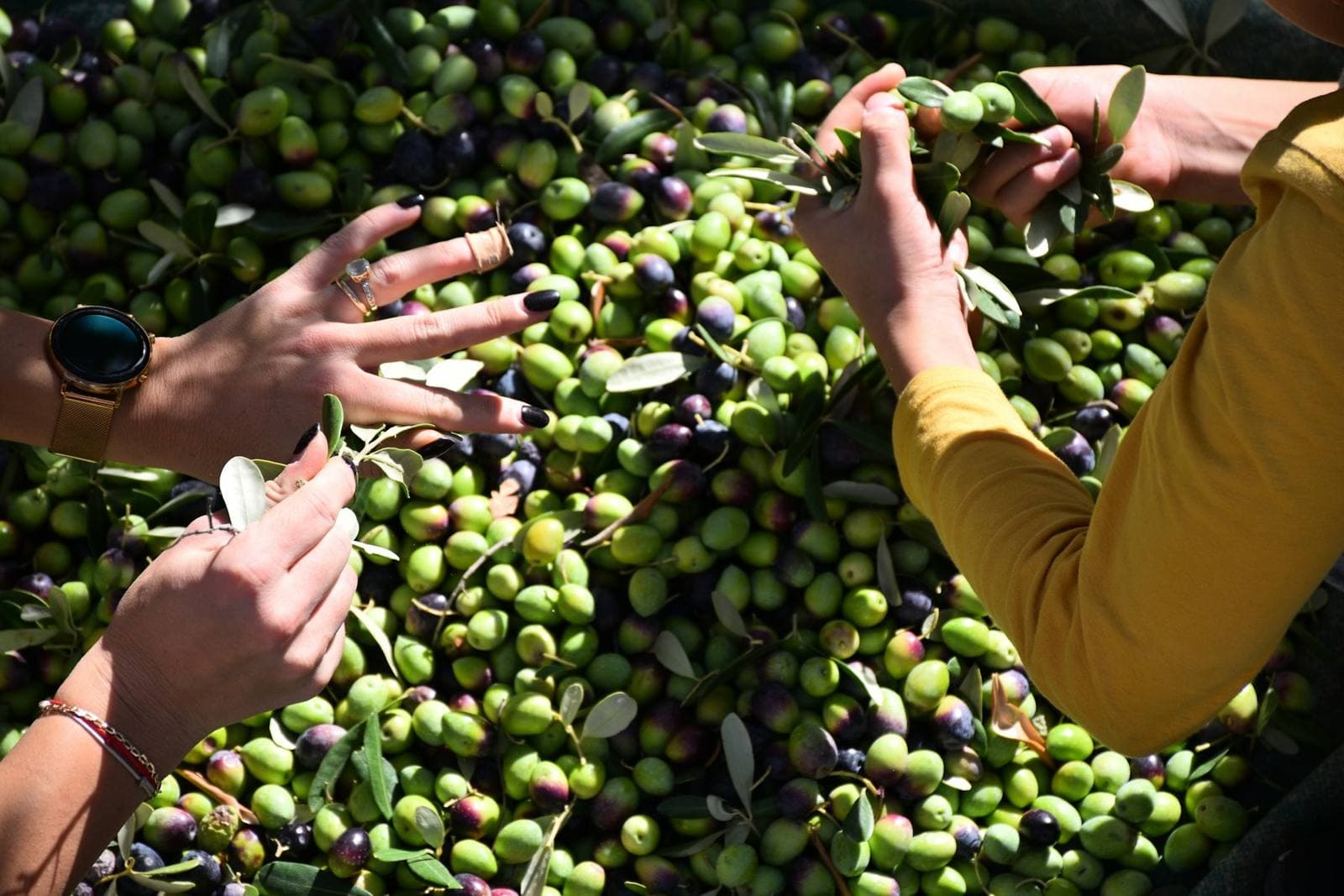
Every harvest carries the origin of the raw material, written by the producer in one line: “olives from his 12 hectares at Bitonto (BA)”, “durum wheat from the hills around Fara San Martino (CH)”. Without that line the lot is not approved.
The producer also declares whether the raw material is all his own or bought from others. Buying it is not a flaw — a pasta workshop taking wheat from the neighbour is doing something normal — but it has to be said: when it is bought, the producer uploads the purchase invoices with the supplier’s town, and the buying office reads them before approving.
If one day it were no longer true
If a producer used non-Italian raw material, that is what you would read on their page. The banner sentence, for that category, disappears: you cannot promise “wheat grown in Italy” when for one producer it is not true. In its place stays the origin written plainly, which is the true information.
The site has no Italian-ness sticker and grants none: it has one line for every lot, and that line either tells the truth or brings a promise down.
If a declaration is false
The lot is not approved, the producer’s page is suspended, and anyone can report it by writing to info@orterra.it. A false declaration about the origin of a food is not a matter between us and the producer: it concerns whoever bought believing that line.
How we check the numbers of a harvest — hectares, plants, litres — is in how we order the products.